EU Packaging and Packaging Waste Regulation (PPWR) Explained: PFAS Bans, Plastic Wrap Bans, and the 2030 Supermarket Makeover
The EU's Packaging and Packaging Waste Regulation (PPWR) marks the biggest overhaul of packaging rules in 30 years. From banning PFAS "forever chemicals" in food containers to phasing out single-use plastics and overpackaging, this new regulation will fundamentally change how products are packaged, sold, and recycled across all 27 Member States
Unnecessary packaging waste is a major and growing challenge in the European Union. The EU generates nearly 80 million tonnes of packaging waste per year, and that figure is growing. Dealing with packaging waste is costly and difficult because of mixed materials, complex sorting systems, and shifting financial burdens to public funds. Therefore, The Packaging and Packaging Waste Regulation (PPWR) was passed to solve a packaging crisis that has spiralled out of control.
The Packaging and Packaging Waste Regulation (PPWR), formally Regulation (EU) 2025/40, is the EU's most comprehensive overhaul of packaging rules in three decades. Adopted by the European Parliament and the Council on 19 December 2024 and published in the Official Journal (OJ L, 22.1.2025), it entered into force on 11 February 2025 and becomes fully applicable on 12 August 2026, repealing the old Packaging and Packaging Waste Directive (94/62/EC) .
Unlike the previous Directive, which allowed Member States to implement rules differently, the PPWR is a Regulation which means that it applies directly and uniformly across all 27 EU countries.
The PPWR covers all packaging and packaging waste regardless of material, use, or origin whether it is industrial, commercial, retail, household, and online. It establishes four interconnected pillars:
- Sustainability requirements: All packaging must be recyclable, minimise harmful substances, and meet strict design standards.
- Packaging minimisation: Empty space and overpackaging are prohibited; packaging must be the minimum necessary for product protection.
- Extended Producer Responsibility (EPR): Producers must bear the full cost of collecting, sorting, and recycling their packaging waste, with fees modulated based on recyclability.
- Reuse and refill targets: Mandatory quotas for reusable packaging in transport, e-commerce, and the beverage/takeaway sectors.
Why was the law passed?
Unnecessary packaging waste was growing faster than our economies and our population. The European Commission identified five structural failures
1. Toxic chemicals in everyday packaging: PFAS (a large group of man-made synthetic chemicals often called "forever chemicals" because they do not break down easily in nature or the human body) that are used for grease and water resistance were present in food-contact packaging at levels linked to cancer, thyroid disease, and infertility and there was no EU-wide limit
5. Fragmented national rules: The old Directive created a patchwork of 27 different national systems, making it harder for businesses to operate across borders and for consumers to know what was recyclable where.
The PPWR therefore aims to make packaging safe, sustainable, and circular while ensuring the free movement of packaged goods across the EU single market.
What is the precise impact on society ?
PHASE 1 — FROM 12 AUGUST 2026
- PFAS restrictions in food-contact packaging: Any packaging intended to touch food, from pizza boxes and burger wraps to baby food pouches and coffee cups, must not exceed:
- 25 ppb for any individual PFAS (targeted analysis)
- 250 ppb for the sum of targeted PFAS
- 50 ppm for total fluorine, including polymeric PFAS .
Packaging already on the market before 12 August 2026 may remain, but anything placed on the market after that date must comply .
- Heavy metal limits: The combined concentration of lead, cadmium, mercury, and hexavalent chromium in any packaging or packaging component must not exceed 100 mg/kg (100 ppm by weight) . This limit is not new in substance, it existed under the old Directive, but the PPWR now enforces it through mandatory lab testing, technical documentation, and market surveillance.
PHASE 2 (2028-2038)
- Less overpackaging in your mailbox: The empty space in any sales packaging must be reduced to the minimum necessary to ensure product protection. Packaging that uses double walls, false bottoms, or other tricks to increase the perceived volume of the product is prohibited unless protected by design rights or trademarks . Filler materials like bubble wrap, polystyrene chips, and crumpled paper legally count as "empty space" under the new rules. That oversized Amazon box with a tiny item inside? It will now be shipped in a smaller box that fits your item perfectly.
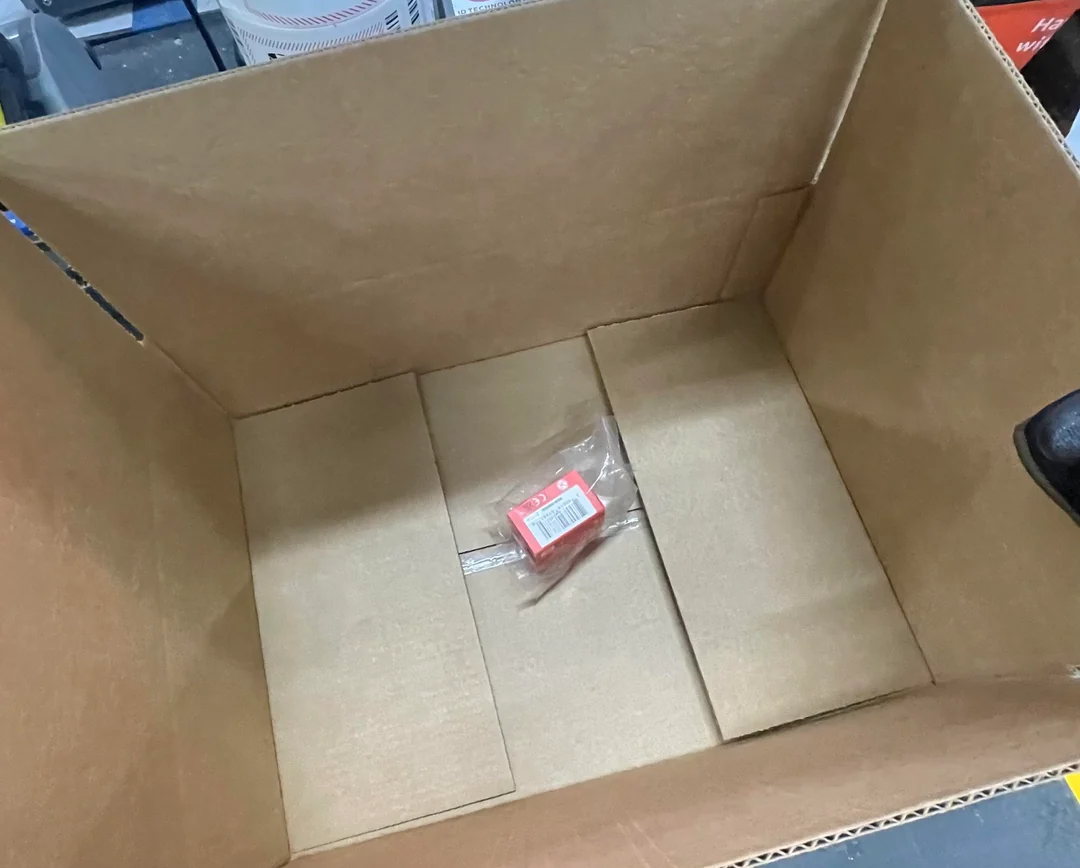
Image by No_noise_4862 on Reddit
- Plastic-free produce aisles: Single-use plastic packaging for unprocessed fresh fruit and vegetables is restricted. Member States can maintain existing national bans until 1 January 2030, but the direction is clear: your cucumbers, bananas, and apples will increasingly be sold loose or in sustainable alternatives .
- Goodbye throwaway sachets: Small single-use plastic packaging for condiments, sauces, and beverages consumed on-premises in the HORECA sector (hotels, restaurants, cafés) is restricted. Your takeaway ketchup packet and coffee stirrer are on their way out .
- Deposit-return systems everywhere: By 1 January 2029, every Member State must establish deposit-return systems for single-use plastic and metal beverage containers, unless they already achieve high separate collection rates through other means. If you have traveled to Germany or Scandinavia, you know how this works: pay a small deposit, return the empty bottle, get your money back .
- Clear bin labels : By 12 August 2028, all waste bins for packaging will carry harmonised EU labels telling you exactly which material goes where. This means no more standing in front of three bins guessing whether your coffee cup belongs with paper or plastic .
- Refill options at cafés: Member States must incentivise restaurants, canteens, bars, and cafés to serve tap water in reusable or refillable formats for free or a low service fee.
- Recyclability grades: From 2030 packaging will carry performance grades (A–C) based on how easily it can be recycled. This will appear on labels and influence EPR fees, pushing manufacturers toward better design.
Grade C packaging will be banned from the market entirely by 2038, leaving only Grades A and B permissible.
- QR codes and digital labels: Packaging will increasingly feature QR codes or digital markings that tell you the exact material composition and how to sort it which will be accessible via your phone .
Important nuance: the PPWR does not set uniform EU-wide fines. Member States must lay down rules on penalties that are "effective, proportionate and dissuasive" by 12 February 2027. Enforcement includes: product withdrawal, market prohibition, recall, customs blocks at EU borders, and administrative fines.
Tamari is the founder and author of Behind the Policy. She holds a Bachelor’s degree in Political Science and is completing a Master’s degree in International Politics at KU Leuven. Her work focuses on translating EU laws, regulations, and policy developments into clear explanations of their impact on citizens and society.
Sources & credits
- 1. Regulation (EU) 2025/40 of the European Parliament and of the Council of 19 December 2024 on packaging and packaging waste, amending Regulation (EU) 2019/1020 and Directive (EU) 2019/904, and repealing Directive 94/62/EC — Official text published in OJ L, 22.1.2025.
- https://eur-lex.europa.eu/eli/reg/2025/40/oj/eng
- 2. EUR-Lex Summary: Packaging and packaging waste (from 2026) — Official summary of key points, sustainability requirements, and obligations.
- https://eur-lex.europa.eu/EN/legal-content/summary/packaging-and-packaging-waste-from-2026.html
- 3. European Commission — Packaging and packaging waste — Official policy portal with scope, targets, and background.
- https://environment.ec.europa.eu/topics/waste-and-recycling/packaging-waste_en
- 4. EUROPEN — PPWR Survival Guide (May 2025) — Comprehensive non-exhaustive overview of requirements, deadlines, and obligations.
- https://www.europen-packaging.eu/wp-content/uploads/2025/01/EUROPEN-PPWR-survival-guide-May-2025.pdf
- Cover Image created by Tamari Tabatadze
Related reading
EU Deforestation Law: Why Your Coffee and Chocolate Now Need GPS Proof
Europe is rewriting the rules of global trade. Starting 30 December 2026, everyday items like coffee, chocolate, soy, beef and palm oil must be backed by GPS proof that they did not destroy a forest. Fines start at 4% and penalties include removing products from the shelves or seizing the illegal goods. Here is what the EU Deforestation Regulation means for your shopping cart.
EU Nature Restoration Law Explained : What it Means for Your City, Rivers, Bees and Food
81% of Europe ´ s natural habitats are in poor condition. The EU passed a law to fix that. Discover how the Nature Restoration Law protects city trees, brings back pollinators and frees 25,000 km of rivers.